Laying on of Hands
A study of the biblical ceremony used to set people apart for spiritual purposes, confer blessings, receive the Holy Spirit, ordain servants, anoint the sick and acknowledge God's authority working through His Church.
The laying on of hands is a ceremony performed by the ministry on special occasions such as for the receiving of God’s Holy Spirit after baptism, at ordination and for other special purposes. It symbolizes one’s submission to God and to the Church which is God’s instrument on earth. Such a ceremony is the occasion of God conferring a spiritual gift, blessing or service to the person.
Set Apart for a Spiritual Purpose
Hebrews 6:2 identifies laying on of hands as one of the fundamental doctrines of the Church. It is an ancient religious ceremony with examples throughout both the Old and New Testaments.
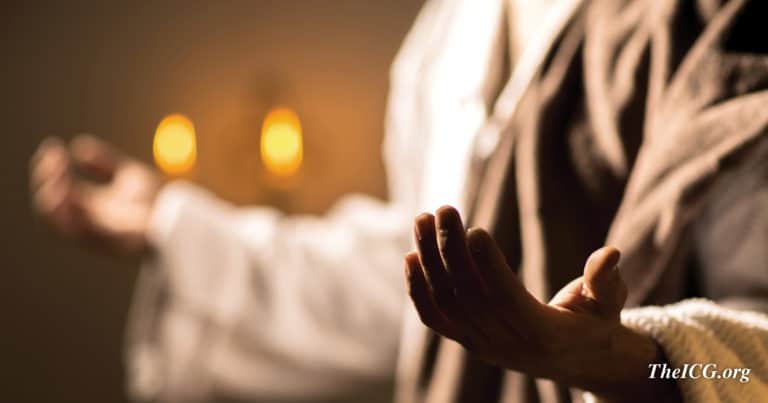
The ceremony consists of a person in religious authority placing hands upon the head of another person upon whom a blessing, office, spiritual gift or special service is being conferred.
The act is normally accompanied by prayer. The prayer explains the purpose of the ceremony and asks God to grant the particular blessing, gift, responsibility or spiritual benefit involved.
Its central meaning is that a person is being set apart for a spiritually related purpose. That may involve qualification for a particular task, special consideration from God or recognition of an office and responsibility.
Because of that meaning, the ceremony may be performed publicly before a congregation. It demonstrates that God works through fallible human beings in administering His Church government.
When a minister lays hands upon a person, the lesson emphasizes that the minister is acting only as an agent or representative. He does not confer a spiritual gift out of his own power and does not exercise an independent authority.
Rather, the minister symbolizes what God Himself is conferring. The authority ultimately belongs to God, and the Church and ministry function only as instruments through which He chooses to work.
Submission to the ceremony likewise carries symbolic meaning. Whether after baptism, during anointing, at ordination or in another special circumstance, the person acknowledges the authority God has placed within the Church.
The Old Testament contains early examples. Jacob laid his hands on Ephraim and Manasseh in passing on blessings and promises. The tribe of Levi was set apart for priestly service, and Joshua had hands laid upon him when he was appointed to lead Israel.
In the New Testament, one of the most important uses follows water baptism. Acts 8 shows hands being laid on baptized believers as the ministry prayed for them to receive God's Holy Spirit.
The Church also uses the ceremony in connection with anointing and prayer for the sick. The symbolic act identifies the person as receiving special prayer and consideration before God.
Ordination is another important use. Elders, deacons and deaconesses are set apart for positions of service, responsibility and authority within the Church through prayer and the laying on of hands.
The example of Jesus blessing little children provides the basis for another traditional use. Ministers place their hands on children and ask God for protection and spiritual blessing.
During the Church's marriage ceremony, the minister also places his hands over the joined hands of the couple during prayer, symbolizing that the marriage is being set apart before God.
Laying on of hands is therefore a simple ceremony with extensive spiritual symbolism. It demonstrates God's willingness to work through human instruments who remain fallible and imperfect while serving His purposes.
What the Ceremony Represents
A Biblical Church Practice
Hebrews places laying on of hands among the foundational doctrines of Christian teaching.
Dedicated for a Purpose
The ceremony marks a person as being specially set apart for a blessing, responsibility, gift or service.
The Minister Represents God
The minister does not act by personal power. He symbolizes what God grants and acts within authority given through the Church.
Following Baptism
After water baptism, the ministry lays hands on the new convert and asks God to give the Holy Spirit.
Ordination to Responsibility
Church servants are set apart through prayer and laying on of hands for positions of authority and service.
Special Prayer Before God
The ceremony is also associated with healing, blessing children, marriage and other special spiritual circumstances.
When Laying on of Hands Is Used
Lesson Fifteen describes several specific situations in which this symbolic ceremony is used to set a person apart before God.
After baptism, the minister places his hands on the new convert and asks God to give His Holy Spirit.
Elders, deacons and deaconesses are set apart for positions of service, authority and responsibility within the Church.
Ministers lay hands on and anoint those requesting prayer for God's healing and special intervention.
Following Christ's example, ministers pray for small children and ask God to bless and protect them.
During the marriage ceremony, the minister places his hands over the couple's joined hands while asking God to enter and bless their covenant.
More generally, the act can accompany prayer when a person is being set apart for a special spiritual blessing, gift or service.
Read These Scriptures in Your Own Bible
Questions
All 17 review questions are displayed in full. Complete them before opening the answer key below.
The laying on of hands ceremony is performed by _____________ [whom?].
The laying on of hands ceremony is used …
- a) for the receiving of the Holy Spirit at baptism.
- b) for ordination
- c) to convey a spiritual gift
- d) to convey a blessing
- e) to convey service
- f) to symbolize one’s submission to God
- g) all of the above
Laying on of hands was never used in the Old Testament. True or False?
Which verse establishes laying on of hands as a fundamental doctrine of the church?
- a) Matthew 6:2
- b) Hebrews 6:2
- c) Genesis 6:2
- d) Leviticus 6:2
The laying on of hands ceremony is usually accompanied by a prayer that delineates the nature of the spiritual blessing. True or False?
The ceremony shows that a person is being acknowledged as qualified for a particular task or blessing. True or False?
For the most part, this is a private ceremony performed behind closed doors. True or False?
This ceremony is used by God in administering church government. True or False?
When a minister lays his hands upon a person, he does so…
- a) as an agent or representative of God
- b) fulfilling a position of spiritual authority in the church
- c) both
One who submits to this ceremony during ordination, after baptism, during anointing for healing or any other special circumstances is acknowledging the authority God has placed in the church and ministry and shows submission to this authority. True or False?
Continuing from question 10, the authority one submits to in this ceremony is…
- a) the minister’s authority
- b) the church’s authority
- c) God’s authority
- d) all of the above
In the laying on of hands ceremony the minister…
- a) is an agent on his own authority
- b) administers his own authority
- c) confers spiritual gifts within himself to the one receiving the laying on of hands
- d) only symbolizes what God confers
What is true about a minister who performs this ceremony?
- a) he is to be obeyed without question
- b) he is without sin
- c) he is fallible and imperfect
- d) he is a servant of the congregation and of God
After baptism, through the laying on of hands, a person is set apart as a begotten son of God. True or False?
When a member of the church is ordained to elder, deacon or deaconess, he or she…
- a) is put into a position of authority and responsibility
- b) is now a human instrument of God’s government
- c) has learned how to serve
- d) is faithful to God’s authority
- e) all of the above
The laying on of hands is used for what situations?
- a) in anointing the sick
- b) in the blessing of little children
- c) in ordination
- d) in the marriage ceremony
- e) in baptism
- f) to convey blessings and spiritual gifts
- g) all of the above
The laying on of hands is a simple but deeply symbolic ceremony which…
- a) has special application in special circumstances (as listed in question 16)
- b) is of critical importance to Christianity
- c) shows that God works and deals with mankind
- d) that God uses humans in His work and plan though they are fallible and imperfect
- e) all the above